
Antioxidants 101: Your Skin’s First Line of Defense
Why Antioxidants Are Essential for Healthy Skin, Healthy Aging, and Overall Wellness
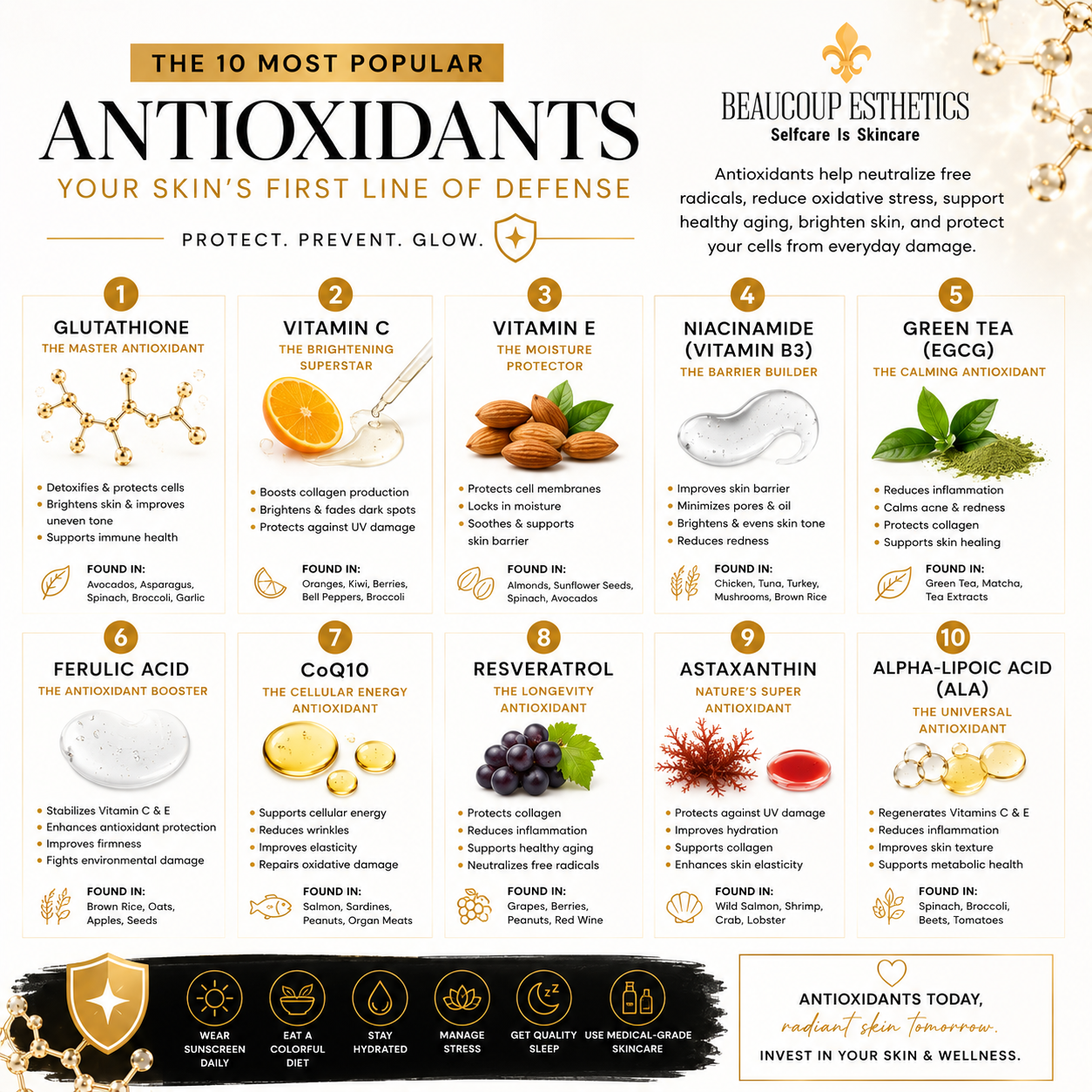
When most people think about skincare, they think about cleansers, moisturizers, or sunscreen. While these products are important, one of the most powerful ways to protect your skin starts at the cellular level—with antioxidants.
Antioxidants are naturally occurring compounds that help protect your body from damage caused by free radicals, unstable molecules that contribute to premature aging, inflammation, hyperpigmentation, and chronic disease.
Whether you’re trying to achieve brighter skin, reduce signs of aging, or improve your overall wellness, antioxidants should be a cornerstone of your daily routine.
What Are Free Radicals?
Free radicals are unstable molecules produced naturally during normal metabolism. They can also be generated by environmental factors such as:
- UV radiation
- Air pollution
- Cigarette smoke
- Stress
- Poor diet
- Alcohol consumption
- Lack of sleep
- Chronic inflammation
Because they have an unpaired electron, free radicals seek stability by stealing electrons from healthy cells. This process damages cell membranes, proteins, collagen, elastin, and even DNA.
This damage is known as oxidative stress.
What Is Oxidative Stress?
Oxidative stress occurs when your body produces more free radicals than it can neutralize with antioxidants.
Over time, oxidative stress contributes to:
Skin Concerns
- Fine lines and wrinkles
- Hyperpigmentation
- Uneven skin tone
- Loss of collagen
- Skin laxity
- Acne inflammation
- Rosacea flare-ups
- Slower wound healing
Health Concerns
- Heart disease
- Diabetes
- Arthritis
- Neurodegenerative diseases
- Chronic inflammation
- Immune dysfunction
- Accelerated aging
This is why antioxidants are so important—they help restore balance and protect healthy cells from damage.
How Do Antioxidants Work?
Antioxidants donate electrons to unstable free radicals without becoming unstable themselves.
By doing so, they:
- Neutralize free radicals
- Reduce inflammation
- Protect collagen and elastin
- Support healthy cell repair
- Improve skin tone
- Slow visible signs of aging
- Strengthen the skin barrier
- Support immune function
Think of antioxidants as your body’s natural defense system against everyday damage.
The Most Popular Antioxidants for Skin and Wellness
1. Glutathione
The Master Antioxidant
Glutathione is often referred to as the body’s most powerful antioxidant because every cell in the body produces it.
Benefits
- Neutralizes free radicals
- Supports liver detoxification
- Brightens skin
- Helps improve hyperpigmentation
- Supports immune health
- Reduces oxidative stress
- Promotes healthy aging
Research suggests glutathione may help improve uneven skin tone by influencing melanin production and reducing oxidative damage. While promising, it works best as part of a comprehensive skincare and wellness plan.
Natural sources include:
- Avocados
- Asparagus
- Spinach
- Broccoli
- Garlic
2. Vitamin C
The Brightening Superstar
Vitamin C is one of the most extensively researched skincare ingredients.
Benefits include:
- Stimulates collagen production
- Brightens dull skin
- Reduces hyperpigmentation
- Protects against UV-induced free radical damage
- Improves wound healing
- Helps fade acne marks
Topical Vitamin C is most effective when paired with sunscreen because it enhances protection against environmental damage.
Food sources:
- Oranges
- Strawberries
- Kiwi
- Bell peppers
- Broccoli
3. Vitamin E
The Moisture Protector
Vitamin E is a fat-soluble antioxidant that protects cell membranes.
Benefits include:
- Prevents moisture loss
- Reduces inflammation
- Supports wound healing
- Protects against UV damage
- Strengthens the skin barrier
Vitamin E works especially well when combined with Vitamin C because each helps regenerate the other after neutralizing free radicals.
Food sources:
- Almonds
- Sunflower seeds
- Spinach
- Avocados
4. Niacinamide (Vitamin B3)
The Barrier Builder
Niacinamide is one of the most versatile skincare ingredients available.
Benefits include:
- Reduces redness
- Improves skin barrier function
- Minimizes enlarged pores
- Regulates oil production
- Brightens hyperpigmentation
- Improves uneven skin tone
- Reduces inflammation
It is an excellent option for acne-prone, rosacea-prone, and sensitive skin.
Food sources:
- Chicken
- Tuna
- Turkey
- Mushrooms
- Brown rice
5. Green Tea (EGCG)
The Calming Antioxidant
Green tea contains polyphenols, particularly epigallocatechin gallate (EGCG), a potent antioxidant.
Benefits include:
- Reduces inflammation
- Calms acne
- Protects collagen
- Helps minimize UV damage
- Supports skin healing
- Reduces redness
Green tea is commonly found in serums, moisturizers, and masks.
6. Ferulic Acid
The Antioxidant Booster
Ferulic acid is derived from plant cell walls and is often paired with Vitamins C and E.
Benefits include:
- Stabilizes Vitamin C
- Enhances antioxidant protection
- Reduces fine lines
- Protects against environmental damage
- Improves skin firmness
This combination is considered one of the gold standards in antioxidant skincare.
7. Coenzyme Q10 (CoQ10)
The Cellular Energy Antioxidant
CoQ10 is naturally produced by the body but declines with age.
Benefits include:
- Supports cellular energy production
- Protects collagen
- Reduces wrinkle formation
- Improves skin elasticity
- Helps repair oxidative damage
Food sources include:
- Salmon
- Sardines
- Organ meats
- Peanuts
8. Resveratrol
The Longevity Antioxidant
Resveratrol is a polyphenol found in grapes, berries, and peanuts.
Benefits include:
- Protects collagen
- Reduces inflammation
- Supports healthy aging
- Neutralizes free radicals
- May improve skin elasticity
It has gained attention for its potential role in promoting healthy aging and longevity.
9. Astaxanthin
Nature’s Super Antioxidant
Astaxanthin is a red carotenoid found in microalgae and seafood.
Benefits include:
- Potent antioxidant activity
- Protects against UV damage
- Improves skin hydration
- Supports collagen
- Reduces wrinkles
- Improves elasticity
Some laboratory studies suggest astaxanthin has stronger antioxidant activity than Vitamin C and Vitamin E in certain experimental settings, though this doesn’t necessarily translate directly into greater clinical benefits.
Food sources:
- Wild salmon
- Shrimp
- Crab
- Lobster
10. Alpha-Lipoic Acid (ALA)
The Universal Antioxidant
Alpha-lipoic acid is unique because it works in both water- and fat-soluble environments.
Benefits include:
- Regenerates Vitamins C and E
- Reduces inflammation
- Improves skin texture
- Supports healthy blood sugar metabolism
- Helps reduce oxidative stress
How to Maximize the Benefits of Antioxidants
For optimal skin and wellness results:
✔️ Wear a broad-spectrum sunscreen every day.
✔️ Eat a colorful diet rich in fruits and vegetables.
✔️ Stay hydrated.
✔️ Exercise regularly.
✔️ Get adequate sleep.
✔️ Manage stress.
✔️ Use medical-grade antioxidant skincare.
✔️ Consider antioxidant supplementation when appropriate under the guidance of your healthcare provider.
Antioxidants are among the most effective tools for protecting your skin and supporting long-term health. They work by defending your cells against oxidative stress, helping to preserve collagen, reduce inflammation, brighten skin, and promote healthy aging.
At Beaucoup Esthetics, we believe the healthiest skin comes from a comprehensive approach that combines science-backed skincare, professional treatments, nutrition, lifestyle habits, and wellness support. Whether through topical serums, nutrient-rich foods, or carefully selected supplements, antioxidants can play a valuable role in helping you achieve radiant skin from the inside out.
Ready to elevate your skincare routine? Schedule a consultation with Beaucoup Esthetics, and let us create a personalized plan featuring antioxidant-rich skincare and treatments tailored to your unique skin goals. Your healthiest, most radiant skin starts here.
You might also like